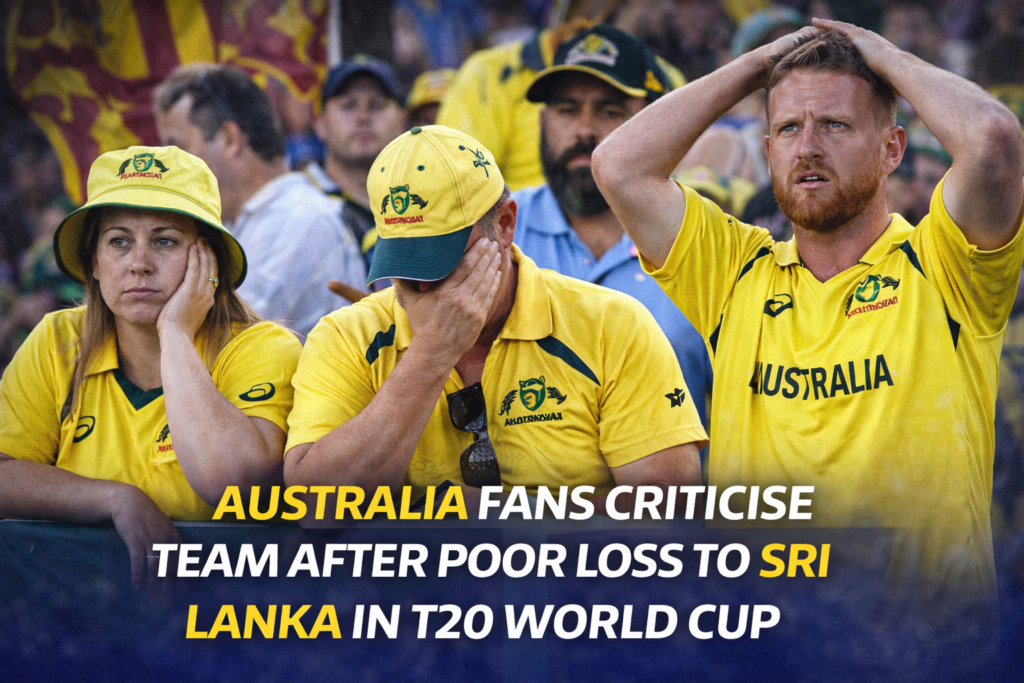
Australia’s campaign in the T20 World Cup has faced a major setback following a disappointing defeat to Sri Lanka, a result that has sparked strong reactions from fans and cricket analysts alike. Known for their competitive spirit and tactical discipline, Australia were expected to dominate the contest. Instead, a combination of batting struggles, inconsistent bowling, and tactical lapses led to an unexpected loss that has intensified scrutiny on the team.
The defeat not only affects Australia’s position in the tournament standings but also raises important questions about form, strategy, and adaptability as the competition progresses.
A Match That Shifted Expectations
Heading into the match, Australia were widely considered favourites. Their balanced squad, experienced leadership, and proven record in major tournaments gave them a psychological advantage. Sri Lanka, while competitive, were viewed as underdogs.
However, cricket often defies predictions, and Sri Lanka capitalised on key moments to turn the game in their favour. Their disciplined bowling and composed batting approach exposed weaknesses in Australia’s execution.
Australia’s Batting Collapse
One of the main reasons behind Australia’s defeat was their batting performance. The top order struggled to build a strong foundation, losing early wickets and allowing Sri Lanka to seize momentum.
Instead of stabilising the innings, the middle order also failed to construct meaningful partnerships. Several batters played aggressive shots without settling at the crease, resulting in a series of quick dismissals.
The lack of patience and inability to rotate strike placed enormous pressure on the lower order, ultimately leading to a below-par total.
Sri Lanka’s Bowling Discipline
Sri Lanka’s bowlers executed their plans effectively, maintaining tight lines and forcing Australia’s batters into mistakes. Their ability to vary pace and target key areas restricted scoring opportunities throughout the innings.
The spinners played a crucial role in controlling the middle overs, slowing down the run rate and preventing Australia from rebuilding momentum. This disciplined approach ensured Sri Lanka maintained pressure from start to finish.
Australia’s Bowling Challenges
While Australia’s bowlers managed early breakthroughs, they struggled to maintain consistency in the later stages. Sri Lanka’s batters showed composure, building partnerships and pacing their chase intelligently.
Australia’s inability to control the flow of runs in the middle overs allowed Sri Lanka to stay ahead of the required run rate. Variations were not executed effectively, and field placements occasionally appeared reactive rather than proactive.
Tactical Decisions Under Scrutiny
Fans and experts have questioned several tactical choices made by Australia during the match. Decisions related to batting order, bowling rotations, and field settings are being closely analysed.
Some critics believe the team lacked flexibility in adapting to match conditions. Instead of adjusting strategies based on Sri Lanka’s strengths, Australia appeared to stick rigidly to pre-planned approaches.
In high-pressure tournaments, the ability to adapt quickly often determines success, and this loss highlighted the importance of tactical awareness.
Fan Reactions and Social Media Response
The defeat triggered strong reactions from Australian fans, many expressing disappointment over the team’s performance. Social media platforms were flooded with discussions about team selection, batting approach, and strategic planning.
While criticism is common after losses, many supporters emphasised the need for the team to regroup quickly and focus on upcoming matches. Fans also acknowledged Sri Lanka’s impressive performance, recognising that their victory was well-earned.
Impact on Tournament Standing
This loss has significant implications for Australia’s position in the tournament. In tightly contested group stages, every match plays a crucial role in determining qualification.
Australia must now win their remaining fixtures to strengthen their chances of advancing to the next round. The defeat also affects net run rate, adding further pressure on future performances.
Sri Lanka’s Rising Confidence
For Sri Lanka, the victory represents a major boost in confidence. Defeating a strong team like Australia demonstrates their ability to compete at the highest level.
Their disciplined execution, teamwork, and composure under pressure highlight their growing strength in international T20 cricket. This win could serve as a turning point in their campaign.
Lessons for Australia Moving Forward
The loss offers valuable lessons for Australia as they prepare for the remaining matches. Key areas requiring improvement include:
Building stronger batting partnerships
Maintaining composure under pressure
Adapting tactics to match conditions
Improving death-over bowling execution
Addressing these aspects quickly will be essential for Australia to remain competitive in the tournament.
The Psychological Challenge
Recovering from a high-profile defeat requires mental resilience. Australia’s experienced players will need to maintain confidence and avoid dwelling on mistakes.
Strong leadership and effective communication within the squad will play a crucial role in ensuring the team remains focused and motivated.
Looking Ahead
Despite this setback, Australia remain a formidable team with the potential to bounce back. Their depth in batting and bowling ensures they still possess the resources needed to compete strongly.
The coming matches will test their ability to learn from this defeat and respond with improved performance.
Final Thoughts
Australia’s loss to Sri Lanka in the T20 World Cup serves as a reminder that success in international cricket requires consistency, adaptability, and mental strength. While the defeat has drawn criticism from fans, it also provides an opportunity for reflection and improvement.
As the tournament continues, Australia’s response to this setback will determine whether it becomes a temporary stumble or a turning point in their campaign.
Sri Lanka, meanwhile, have showcased their growing potential, proving that determination and disciplined execution can overcome even the strongest opponents.